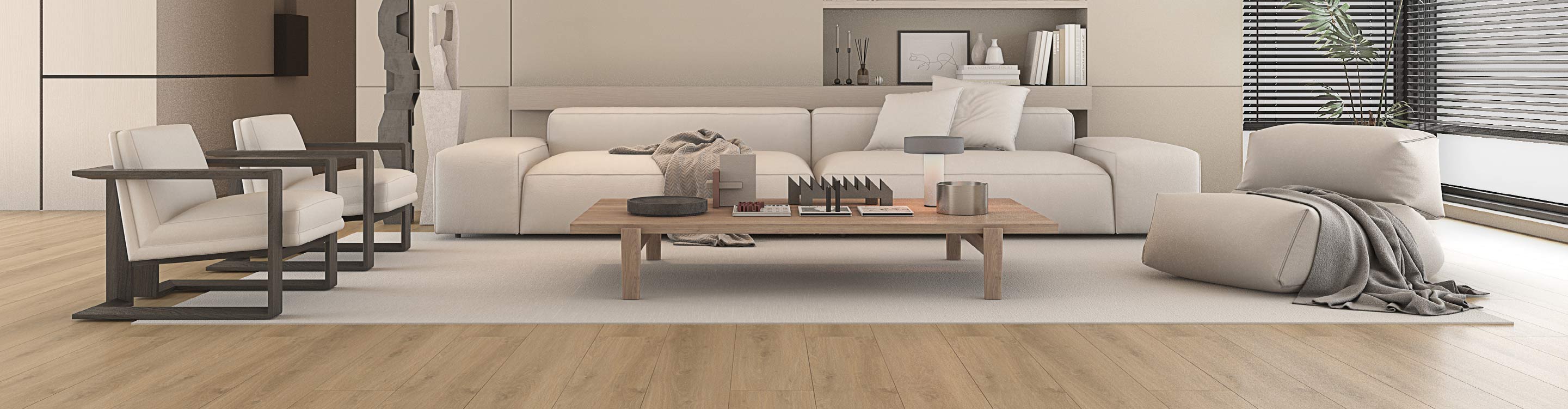
Choosing the right laminate comes down to a few key specifications that have a real effect on how the floor performs in your home. Here is what matters most before you start shopping.
See our full laminate flooring guide for everything in the laminate category.
We're here to help you choose laminate flooring that fits your home and the way you live in it. The right laminate flooring comes down to a handful of specs that actually matter, like durability ratings, thickness, and how well a floor holds up against moisture. Whether you're outfitting a busy kitchen, a quiet bedroom, or a high-traffic hallway, knowing what to look for makes all the difference. Read on to explore the specs that matter most, from durability ratings to the best rooms for laminate, so you can shop with confidence.
Choosing laminate flooring comes down to a handful of specifications that have a direct effect on how the floor performs and how long it lasts. Here's what to evaluate before you decide.
The Abrasion Class, or AC rating, is the single most important spec on any laminate product. It is an industry-standard measure of how resistant the wear layer is to scratching, scuffing, and impact. The scale runs from AC1 for light residential use to AC5 for heavy commercial use, and most residential installations should start at AC3 or higher.
AC3 suits moderate residential traffic in living rooms, dining rooms, and bedrooms. AC4 raises the bar for households with pets, kids, and high foot traffic through main living areas. AC5 is built for commercial applications but is available for residential use when maximum durability is the priority.
Laminate is built in layers: a wear layer on top that carries the AC rating, a decorative layer printed with the wood or stone image, a rigid core that provides structural stability, and a backing layer for moisture resistance. Every layer contributes to overall performance, but the wear layer rating is the clearest signal of how long your floor will last.
See our types of laminate flooring guide for a detailed breakdown by AC rating.
Laminate thickness typically ranges from 6mm to 12mm, and the difference is more noticeable underfoot than it might seem on paper. Eight millimeters is the entry-level standard and works adequately in lower-traffic rooms on a level, well-prepared subfloor. Ten to twelve millimeters is the range most flooring experts recommend for general residential use.
Thicker laminate provides better sound absorption, which matters in bedrooms and in multi-story homes where foot noise carries between floors. It also tolerates minor subfloor irregularities more forgivingly, which reduces the chance of hollow spots or movement underfoot. Thickness does not affect water resistance. That comes down to the core material and seam treatment, not the overall depth of the plank.
Laminate is water-resistant, not waterproof. Most laminate products can handle everyday surface spills when wiped up promptly, but water that sits at the seams or works beneath the surface can cause the core to swell, leading to warping and permanent damage.
This distinction matters most when you are deciding which rooms laminate is right for. Kitchens are generally a good fit with prompt spill cleanup and careful maintenance around the sink and appliances. Laundry rooms call for the same care, with extra attention around washer hoses and connections. Bathrooms are not the right environment for laminate, since showers, baths, and daily humidity create persistent moisture exposure at the seams.
For spaces where water resistance is a higher priority, tile and luxury vinyl are both stronger choices. For a direct comparison across all the key dimensions, see our laminate vs vinyl flooring comparison.
Laminate comes in wood-look, stone-look, and tile-look finishes, and the visual quality varies a lot by product. The most realistic laminate uses embossed-in-register, or EIR, technology, which lines up the surface texture with the printed grain pattern beneath it. This is the detail that makes a plank read as real hardwood rather than a printed surface when you look closely.
Finish type also affects how the floor wears visually over time. Matte and hand-scraped finishes are more forgiving of everyday scuffs and fine scratches than high-gloss surfaces, which show marks more readily. Wider and longer planks create a more open, contemporary look, while traditional widths suit more classic interiors.
For the full range of laminate styles and finish options, see our types of laminate flooring guide.
Laminate is a floating floor, meaning it clicks together and floats as a unit rather than being glued or nailed to the subfloor. This calls for a subfloor that is flat, level, dry, and structurally sound. Variations in the subfloor surface translate directly into the feel of the finished floor.
Thicker laminate tolerates minor subfloor irregularities better than thinner options. Underlayment selection for sound dampening, moisture protection, and underfoot comfort should match both the laminate product and the subfloor type. Proper expansion gaps around the perimeter of the room are essential, since they allow for the natural movement of the floating floor over time. Professional installation helps ensure all of these factors are handled correctly and keeps your product warranty intact.
For guidance on subfloor preparation, see our subfloor significance guide. Use our square footage calculator to estimate how much laminate you will need before your consultation.
The right laminate for a household with active kids and pets looks different from the right laminate for a quiet bedroom. Higher-traffic, higher-activity households should prioritize AC4 or AC5 ratings, harder-wearing matte or textured finishes, and thicker planks that stand up to impact and daily use. Lighter-use rooms give you more flexibility to choose based on style.
One important difference from hardwood: laminate cannot be sanded and refinished when the surface shows significant wear. Once the wear layer is gone, the floor needs to be replaced. This makes your initial AC rating choice more important than it might seem at first, and buying quality upfront pays off over the life of the floor.
Laminate performs well throughout most of the home, but the right product varies by room. Here is what to consider space by space.
The kitchen is one of the most popular rooms for laminate, and it works well there with the right approach to moisture management. Laminate's durability, easy cleaning, and wide range of wood-look and stone-look styles make it a natural fit for a kitchen's visual demands. The key is water: prompt cleanup of spills around the sink, dishwasher, and refrigerator is essential to keep moisture from working into the seams.
For kitchens where cooking is frequent and spills are common, a water-resistant laminate with a tight locking system and sealed seam treatment offers the most protection. An AC3 rating or higher handles the foot traffic that most kitchen floors see. Shop laminate flooring to explore options suited to kitchen use.
Living rooms and bedrooms are ideal for laminate. Low moisture risk, a comfortable feel underfoot, and the visual warmth of wood-look laminate all come together well in these spaces. AC2 or AC3 is generally enough for bedrooms, while living rooms that see more daily traffic and pet activity benefit from AC3 or AC4.
Thicker laminate, in the 10 to 12mm range, provides noticeably better sound absorption in bedrooms, which matters in multi-story homes where foot traffic on upper floors can be heard below. Underlayment selection also plays a meaningful role in both comfort and sound dampening in these spaces.
Laminate can work in a laundry room with the right product choice and careful installation. The main risk is moisture from appliance hoses, drainage lines, and condensation. Water-resistant laminate with a sealed core and tight locking system offers the most protection in this environment.
Installation should include proper sealing around the perimeter and careful attention to any penetrations for plumbing or appliance connections. A laundry room with a history of washer leaks or drainage issues is a higher-risk environment where tile or luxury vinyl may be a more sensible long-term choice.
Basements present a specific moisture challenge that standard laminate is not built to handle: moisture migrating up through a concrete subfloor. In a basement installation, a proper vapor barrier between the concrete and the laminate is essential. Water-resistant or moisture-resistant laminate is the minimum spec for any below-grade installation.
For high-traffic areas such as hallways, entryways, and main living spaces, AC4 or higher is the right durability grade. These spaces benefit from harder-wearing finishes and thicker planks that stand up to the impact and abrasion of heavy daily use.
Bathrooms are a challenging environment for laminate. The steady humidity and moisture exposure from showers, baths, and daily use creates conditions where water can work into laminate seams over time. For bathroom floors where water resistance is the priority, luxury vinyl flooring is the closest option with a similar wood-look aesthetic, and tile flooring is the most durable and moisture-resistant choice for any wet room. Your local store can help you find the right fit for your space.
Luxury vinyl flooring and tile flooring are both strong alternatives for bathrooms and other wet-room applications. Shop laminate flooring to browse the full range of options for the rooms where it excels.
Ready to find the right laminate for your home? Specs and ratings only tell part of the story. The rest comes from experience: knowing how a product performs once it's installed, and which details matter most for your unique space. That kind of insight comes from working with flooring every day, and it's what we bring to every conversation. Don't wait to contact us to talk through your options with a flooring expert at your local store who can help you weigh these choices with confidence.
The best laminate flooring for your home comes down to three specs: AC rating, thickness, and water resistance level. For AC rating, match the durability grade to your actual use. AC3 works for moderate residential traffic, and AC4 or higher is a better fit for households with pets, kids, and high-traffic areas. For thickness, 10 to 12mm is the standard for most residential applications and provides better sound absorption and subfloor tolerance than 8mm entry-level products. For water resistance, choose a laminate with a sealed core and tight locking system if the room will see any moisture exposure. Beyond the specs, finish type and plank format are style decisions, and matte and textured finishes are more forgiving of everyday wear than gloss. Your local flooring expert can help you compare options across all of these dimensions and find the right product for your space.
For most residential applications, 10 to 12mm is the recommended laminate thickness. Eight millimeters is the entry-level standard and is adequate for low-traffic rooms on a flat, well-prepared subfloor, but 10 to 12mm provides a noticeably more solid feel underfoot, better sound absorption between floors, and more tolerance for minor subfloor irregularities. Twelve millimeters is especially worth considering in bedrooms where sound dampening matters, and in any room where the subfloor has minor variations. Thickness does not affect water resistance, which comes down to the core material and seam sealing rather than the overall depth of the plank.
Thank you for contacting Carpet One Floor & Home. Your local flooring expert will reach out to you regarding your inquiry.